
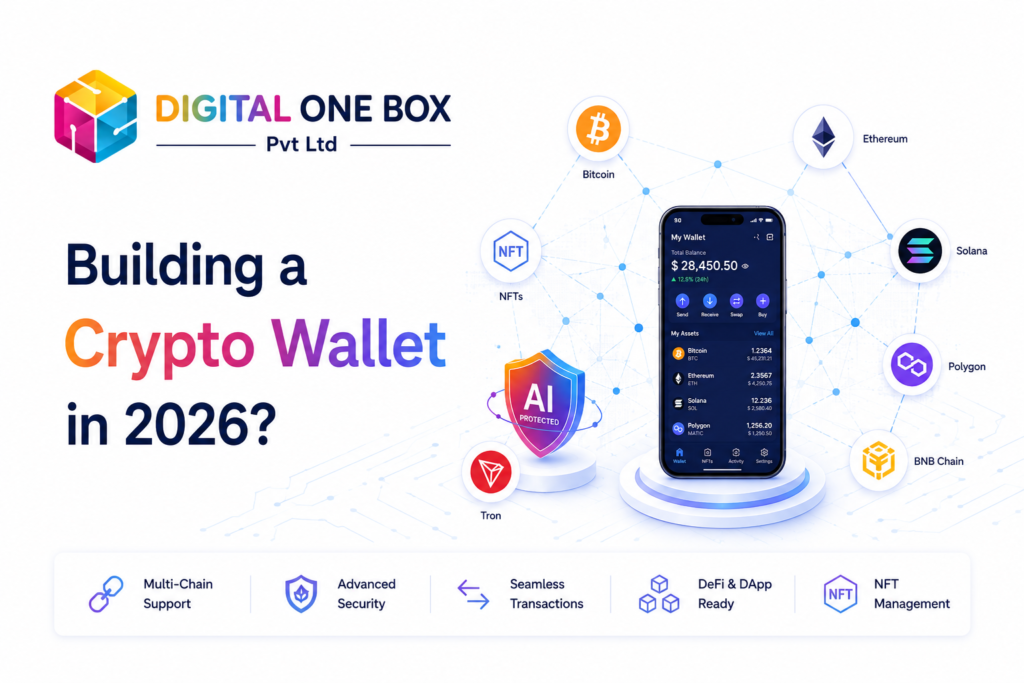
The cryptocurrency industry has evolved far beyond simple Bitcoin transactions. Today’s crypto wallets have become comprehensive digital asset management platforms, supporting cryptocurrencies, NFTs, DeFi applications, tokenized real-world assets (RWAs), staking, and cross-chain ecosystems. Whether you’re launching a fintech startup, a Web3 platform, or an enterprise blockchain solution, your wallet is no longer just a storage application—it’s the foundation of your entire digital asset ecosystem.
However, building a successful crypto wallet in 2026 is significantly more complex than it was just a few years ago. Users expect enterprise-grade security, seamless user experiences, multi-chain compatibility, regulatory readiness, and intelligent automation. A single architectural mistake can lead to poor adoption, security vulnerabilities, or expensive redevelopment after launch.
In this guide, we’ll explore the most common mistakes businesses make during crypto wallet development and explain how you can avoid them to build a secure, scalable, and future-ready wallet.
Mistake #1: Choosing the Wrong Wallet Architecture
One of the biggest mistakes businesses make is selecting the wrong wallet architecture before development even begins.
Many founders focus on features and design without considering whether a custodial, non-custodial, MPC (Multi-Party Computation), smart wallet, or embedded wallet best suits their business model. This early decision influences everything from security and compliance to user experience and operational costs.
Understanding Your Options
Custodial Wallets
- The platform manages users’ private keys.
- Easier account recovery.
- Better suited for exchanges and fintech applications.
- Higher compliance responsibilities.
Non-Custodial Wallets
- Users retain full ownership of private keys.
- Greater decentralization.
- Ideal for DeFi applications and Web3 ecosystems.
- Increased user responsibility for wallet recovery.
MPC Wallets
- Private keys are never stored in a single location.
- Enhanced protection against key compromise.
- Increasingly adopted by enterprises and institutional investors.
Smart Wallets
- Enable programmable account permissions.
- Support gas abstraction.
- Simplify Web3 interactions.
- Improve overall user experience.
Why This Matters
Choosing the wrong architecture often results in expensive redesigns, additional security risks, and limited scalability. Your wallet architecture should align with your business objectives, regulatory requirements, target audience, and long-term product roadmap.
Expert Tip: Define your business model before selecting wallet technology—not the other way around.
Mistake #2: Treating Security as a Feature Instead of a Foundation
Many startups believe they can strengthen security after launching the product. Unfortunately, attackers don’t wait for your next software update.
Security should be embedded into every stage of wallet development—from system architecture to deployment.
Essential Security Features
A modern cryptocurrency wallet should include:
- End-to-end encryption
- Multi-factor authentication (MFA)
- Biometric authentication
- Multi-signature wallets
- Secure private key management
- Cold wallet integration
- Role-based access controls
- API security
- Transaction risk monitoring
- Continuous security audits
Common Security Oversights
Many wallet projects overlook:
- Weak authentication mechanisms
- Unencrypted backups
- Insecure API endpoints
- Poor session management
- Missing fraud detection
- Lack of transaction validation
These vulnerabilities can expose both users and businesses to significant financial and reputational risks.
The Right Approach
Rather than viewing security as an additional feature, successful crypto wallet providers design every component around a security-first architecture. This proactive approach helps reduce attack surfaces while building long-term user trust.
Mistake #3: Ignoring User Experience
A technically advanced wallet won’t succeed if users find it difficult to use.
Many crypto wallets lose potential users during onboarding because they prioritize blockchain complexity over usability.
Think about the first experience of a new user:
- Creating a wallet
- Backing up recovery credentials
- Receiving cryptocurrency
- Sending funds
- Connecting to decentralized applications
If any of these steps feel confusing, users are likely to abandon the platform.
Common UX Mistakes
Businesses often make the following mistakes:
- Complex onboarding processes
- Technical blockchain terminology
- Long wallet addresses with no QR support
- Poor transaction status visibility
- Confusing fee calculations
- Difficult backup and recovery procedures
- Cluttered dashboards
- Inconsistent mobile experience
What Modern Users Expect
Today’s users expect the same level of simplicity they experience in mobile banking apps.
Features such as:
- Biometric login
- QR code payments
- WalletConnect integration
- Real-time transaction tracking
- Push notifications
- Portfolio analytics
- One-tap asset management
- Simple recovery workflows
can significantly improve engagement and retention.
Business Impact
A smooth user experience doesn’t just improve customer satisfaction—it directly influences user acquisition, transaction volume, customer retention, and overall platform growth.
The most successful crypto wallets in 2026 will be those that make blockchain technology feel invisible to the end user.
Mistake #4: Building for One Blockchain Only
One of the most expensive mistakes businesses make is designing a wallet for a single blockchain and assuming it will meet future market demands.
In 2026, users don’t limit themselves to one ecosystem. A typical crypto user may hold Bitcoin, Ethereum, Solana, BNB Chain, Polygon, Tron, Avalanche, and stablecoins—all within the same portfolio. If your wallet only supports one blockchain, you’re immediately limiting its usability and future growth.
Why Multi-Chain Support Matters
Today’s businesses need wallets that support diverse blockchain ecosystems to attract a broader audience and remain competitive.
A modern crypto wallet should seamlessly support:
- Bitcoin
- Ethereum
- BNB Chain
- Polygon
- Solana
- Tron
- Avalanche
- Arbitrum
- Optimism
- Popular token standards such as ERC-20, BEP-20, TRC-20, and SPL
This flexibility enables users to manage multiple assets from a single interface instead of switching between different wallet applications.
Don’t Forget Cross-Chain Functionality
Supporting multiple blockchains is only the first step. Users increasingly expect to move assets between networks quickly and securely.
Features such as:
- Cross-chain transfers
- Multi-chain portfolio management
- Token swapping
- WalletConnect compatibility
- Bridge integrations
can significantly improve the overall user experience.
Think Beyond Today
Many businesses launch with support for one blockchain because it’s faster and less expensive. But as their platform grows, adding new blockchain networks often requires major architectural changes.
Designing a modular, scalable wallet architecture from day one makes future blockchain integrations faster, more secure, and far more cost-effective.
Expert Insight: Build your wallet with expansion in mind. The blockchain landscape evolves rapidly, and your wallet should be ready to evolve with it.
Mistake #5: Overlooking Regulatory Compliance
Many startups focus on development speed and postpone compliance until after launch.
Unfortunately, this approach can create serious legal, operational, and reputational challenges.
As cryptocurrency adoption grows worldwide, regulators are placing greater emphasis on identity verification, anti-money laundering controls, and transaction transparency. Whether you’re targeting retail users, enterprises, or institutional investors, compliance is no longer optional—it’s a competitive advantage.
Key Compliance Areas to Consider
Depending on your business model and target market, your wallet may need support for:
- Know Your Customer (KYC)
- Anti-Money Laundering (AML)
- Customer Due Diligence (CDD)
- Risk-based user verification
- Transaction monitoring
- Suspicious activity reporting
- Data privacy requirements
- Regional regulatory standards
Integrating these capabilities early helps reduce operational risk and prepares your platform for future regulatory changes.
Compliance Doesn’t Have to Hurt User Experience
A common misconception is that compliance makes onboarding slow and frustrating.
In reality, modern identity verification tools can streamline user onboarding through:
- Automated document verification
- Facial recognition
- Biometric authentication
- Real-time identity validation
- Intelligent risk scoring
When implemented correctly, compliance enhances trust while maintaining a smooth user journey.
Build for Global Expansion
If your long-term goal is to serve users across multiple regions, designing your wallet with configurable compliance workflows from the beginning will make future expansion significantly easier.
A compliance-ready platform is not just about meeting regulations—it’s about building credibility with users, partners, and investors.
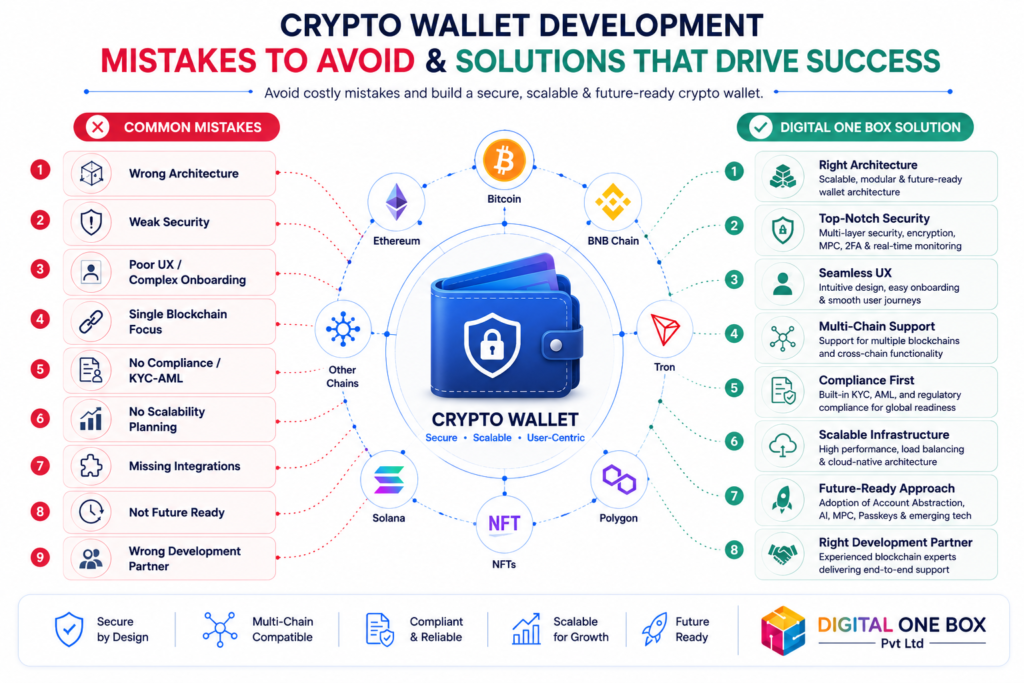
Mistake #6: Ignoring Scalability and Performance
Many crypto wallets perform well during testing but struggle when real users begin transacting at scale.
As your user base grows, your wallet must handle increasing transaction volumes, simultaneous API requests, blockchain synchronization, and real-time balance updates without compromising speed or reliability.
Scalability should never be an afterthought.
Common Performance Challenges
Growing wallet platforms often encounter issues such as:
- Slow transaction processing
- API bottlenecks
- Delayed balance synchronization
- Poor database performance
- High server resource consumption
- Increased downtime during traffic spikes
- Network congestion handling
These issues directly affect user trust and platform reputation.
Building for Enterprise Growth
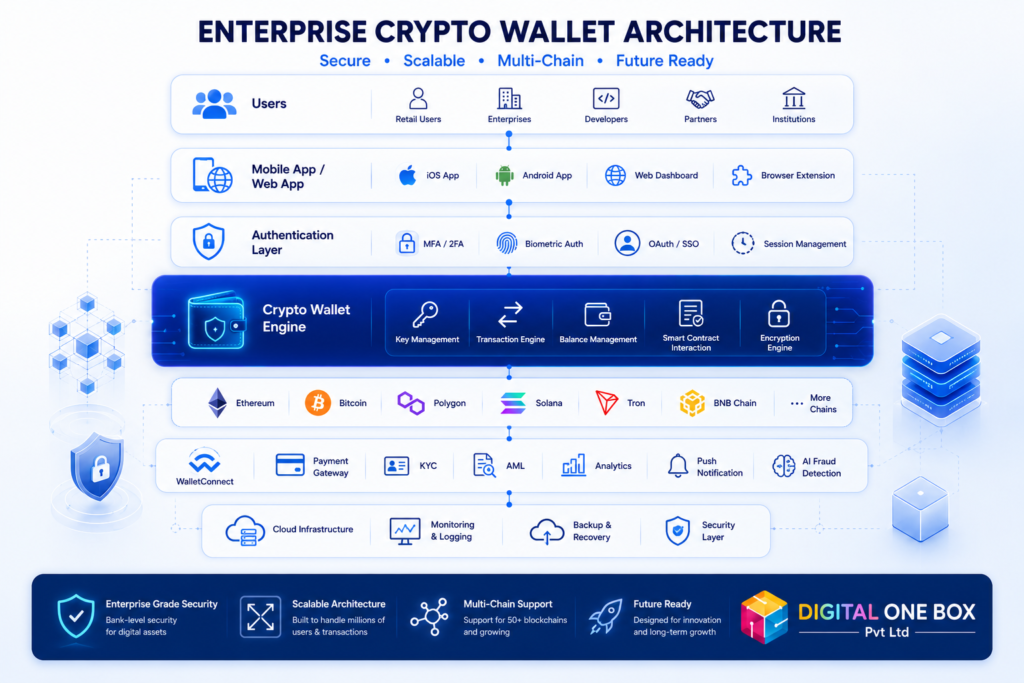
A scalable crypto wallet should be designed with modern infrastructure that supports continuous growth.
Key architectural considerations include:
- Cloud-native deployment
- Microservices architecture
- Load balancing
- Database optimization
- Distributed caching
- Real-time monitoring
- Automated scaling
- High-availability infrastructure
This approach allows your platform to remain responsive even during periods of high demand.
Performance Is Part of the User Experience
Fast transactions, responsive interfaces, and reliable wallet synchronization aren’t just technical achievements—they shape how users perceive your platform.
In the competitive Web3 market, users have countless alternatives. Even small delays or recurring outages can result in lost customers and reduced transaction activity.
Remember: A crypto wallet should be built not only for your first 1,000 users but for your next 1 million.
Mistake #7: Overlooking Third-Party Integrations
A crypto wallet is no longer a standalone application. It serves as the gateway to an entire blockchain ecosystem, and its value depends heavily on how well it connects with external services.
Many businesses focus on core wallet functionality but underestimate the importance of integrations. As a result, users often need to switch between multiple apps to complete basic tasks—leading to poor engagement and lower retention.
Essential Integrations for a Modern Crypto Wallet
A feature-rich wallet should support integrations that enhance usability and expand functionality, including:
- WalletConnect for seamless dApp connectivity
- Fiat on-ramp and off-ramp providers
- Cryptocurrency payment gateways
- Blockchain node providers
- Real-time price and market data APIs
- Push notification services
- Identity verification (KYC) platforms
- Analytics and reporting tools
- NFT marketplaces
- Staking and DeFi protocols
The right integrations create a unified ecosystem where users can manage, trade, stake, and interact with digital assets without leaving the application.
Business Impact
Well-integrated wallets improve user retention, increase transaction activity, and open new revenue opportunities through value-added services.
Expert Tip: Design your wallet with a modular integration layer so new services can be added without rebuilding the platform.
Mistake #8: Failing to Future-Proof Your Wallet
Blockchain technology evolves rapidly. Features that were considered innovative two years ago are now standard expectations.
If your wallet is built only for today’s requirements, it may struggle to keep pace with tomorrow’s innovations.
Technologies Shaping Crypto Wallets in 2026
Forward-thinking businesses are preparing for emerging capabilities such as:
- Account Abstraction (ERC-4337)
- Smart Contract Wallets
- Multi-Party Computation (MPC)
- Embedded Wallets
- AI-powered fraud detection
- Biometric authentication
- Passkey-based login
- Cross-chain asset management
- Gas abstraction
- Tokenized Real-World Assets (RWAs)
Building with flexibility in mind allows these capabilities to be introduced over time without major architectural changes.
Future-Proofing Starts with Architecture
A scalable, modular architecture makes it easier to introduce new blockchain networks, integrate evolving protocols, and adapt to changing user expectations.
Rather than chasing every new trend, successful businesses invest in infrastructure that can support innovation as it becomes relevant.
Mistake #9: Choosing the Wrong Development Partner
Your development partner has a direct impact on your product’s security, scalability, and long-term success.
Many businesses make the mistake of selecting a software vendor based solely on price or delivery timelines. While this may reduce initial costs, it often leads to expensive redevelopment, security issues, or performance limitations after launch.
What to Look for in a Crypto Wallet Development Company
Before choosing a development partner, consider whether they offer:
- Proven blockchain development expertise
- Experience with custodial and non-custodial wallet architectures
- Smart contract development capabilities
- Multi-chain integration experience
- Security-first development practices
- UI/UX design tailored for Web3 users
- Ongoing maintenance and technical support
- Transparent communication and documentation
A reliable partner should not only write code but also help you make informed technical and business decisions throughout the development lifecycle.
Think Long-Term
Launching your wallet is just the beginning. Regular updates, security enhancements, blockchain upgrades, and new feature releases are essential to remain competitive in the evolving Web3 landscape.
Choosing a partner who understands this long-term commitment can significantly reduce future risks and operational costs.
How Digital One Box Helps You Build Future-Ready Crypto Wallets
At Digital One Box, we believe successful crypto wallet development begins with understanding your business objectives—not just your feature list.
Our team combines blockchain engineering, security best practices, and user-centric design to build wallet solutions that are secure, scalable, and ready for the future of digital finance.
Our Development Approach
1. Business Discovery & Strategy
Every project starts with understanding your business model, target audience, compliance requirements, and long-term product vision. This helps us recommend the most suitable wallet architecture and technology stack.
2. Solution Architecture
We design a scalable architecture that supports custodial or non-custodial models, multi-chain compatibility, secure key management, and future feature expansion.
3. UI/UX Design
Our design team focuses on creating intuitive experiences that simplify blockchain interactions, making wallet management accessible for both beginners and experienced users.
4. Secure Development
Security is integrated throughout the development lifecycle with encrypted communication, secure authentication, role-based access controls, and industry-standard development practices.
5. Blockchain & API Integration
We integrate leading blockchain networks, third-party APIs, fiat payment gateways, WalletConnect, market data providers, and identity verification services to create a connected digital asset ecosystem.
6. Quality Assurance & Security Testing
Every wallet undergoes comprehensive testing to evaluate functionality, performance, usability, and security before deployment.
7. Deployment & Ongoing Support
Our engagement continues after launch with platform monitoring, feature enhancements, technical maintenance, and ongoing optimization to support long-term growth.
Why Businesses Choose Digital One Box
Businesses partner with Digital One Box because we focus on delivering practical, scalable blockchain solutions rather than one-size-fits-all software.
Our expertise includes:
- Custom Crypto Wallet Development
- White-Label Wallet Solutions
- Multi-Chain Wallet Development
- Web3 Wallet Development
- Cryptocurrency Exchange Development
- Smart Contract Development
- Token Development
- DeFi Application Development
- NFT Marketplace Development
- Blockchain Consulting
Whether you’re building a startup MVP or an enterprise-grade digital asset platform, our goal is to help you launch with confidence and scale with reliability.
Conclusion
Building a cryptocurrency wallet in 2026 is about much more than creating an application that stores digital assets. Today’s users expect enterprise-grade security, intuitive user experiences, multi-chain compatibility, regulatory readiness, and seamless integration with the broader Web3 ecosystem.
The most successful wallet projects are built on careful planning—not shortcuts. Choosing the right architecture, prioritizing security from day one, designing for scalability, supporting multiple blockchain networks, and preparing for future innovations can significantly reduce development risks and position your platform for long-term success.
Whether you’re launching a startup, expanding a fintech platform, or developing an enterprise blockchain solution, avoiding these common mistakes will help you build a crypto wallet that users trust and businesses can scale with confidence.
Why Choose Digital One Box for Crypto Wallet Development?
At Digital One Box, we combine blockchain expertise with business-focused development to create secure, scalable, and future-ready cryptocurrency wallet solutions.
Our team specializes in:
- Custom Crypto Wallet Development
- Multi-Chain Wallet Development
- Custodial & Non-Custodial Wallets
- White-Label Wallet Solutions
- Web3 Wallet Development
- Smart Contract Integration
- DeFi & NFT Wallet Development
- Enterprise Wallet Infrastructure
- Security-First Architecture
- Post-Launch Maintenance & Support
From strategy and architecture to deployment and ongoing optimization, we help businesses build wallet solutions designed for the evolving digital asset economy.
Continue Exploring Blockchain & Web3 Insights
Building a secure crypto wallet is just one part of creating a successful blockchain ecosystem. If you’re planning to launch a Web3 startup, crypto exchange, token, or AI-powered blockchain solution, these expert guides will help you make informed decisions before you build.
Recommended Reads
How to Choose the Best MLM Software Development Company
Learn the key factors to evaluate before selecting a development partner, including technology stack, scalability, customization, security, and long-term support.
👉 Read More: https://blog.digitalonebox.com/how-to-choose-best-mlm-software-development-company/
What is MLM Smart Contract Development?
Discover how blockchain-powered smart contracts are transforming MLM businesses through automation, transparency, and decentralized commission management.
👉 Read More: https://blog.digitalonebox.com/what-is-mlm-smart-contract-development/
How to Create Your Own Cryptocurrency from Scratch in 2026
A complete guide covering blockchain selection, tokenomics, smart contract development, legal considerations, exchange listings, and launch strategies.
👉 Read More: https://blog.digitalonebox.com/how-to-create-your-own-cryptocurrency-from-scratch-in-2026/
AI + Blockchain: The Era of Autonomous Finance
Explore how Artificial Intelligence and Blockchain are converging to power autonomous finance, intelligent trading systems, fraud detection, and next-generation decentralized applications.
👉 Read More: https://blog.digitalonebox.com/ai-blockchain-the-era-of-autonomous-finance/
Frequently Asked Questions
1. What is crypto wallet development?
Crypto wallet development is the process of building software that enables users to securely store, send, receive, and manage digital assets.
Modern wallets can also support staking, NFTs, decentralized applications (dApps), token swaps, multi-chain asset management, and advanced security features such as biometric authentication and multi-signature approvals.
2. Which type of crypto wallet is best for a business?
The best wallet type depends on your business model and target audience.
Custodial wallets provide greater administrative control, while non-custodial wallets give users complete ownership of their private keys. Businesses serving institutional or enterprise clients may also benefit from Multi-Party Computation (MPC) wallets for enhanced security.
3. How much does crypto wallet development cost?
The cost varies based on your wallet’s features, supported blockchain networks, security requirements, and level of customization.
Factors such as multi-chain compatibility, third-party integrations, compliance modules, and advanced security architecture all influence the overall development investment.
4. How long does it take to build a crypto wallet?
Development timelines depend on project complexity and customization.
A simple white-label wallet can be deployed more quickly, while a fully custom enterprise wallet with advanced integrations, compliance features, and multi-chain support requires a longer development cycle.
5. What security features should every crypto wallet include?
Every modern crypto wallet should implement multiple layers of security.
Essential protections include end-to-end encryption, multi-factor authentication (MFA), biometric login, secure private key management, cold wallet support, transaction monitoring, API security, and regular security testing.
Ready to Build a Secure Crypto Wallet?
Whether you’re launching a startup wallet, integrating digital asset payments into an existing platform, or developing an enterprise-grade Web3 ecosystem, having the right technology partner can make all the difference.
Digital One Box delivers secure, scalable, and fully customized cryptocurrency wallet solutions that combine robust blockchain engineering with a user-first approach. From initial consultation and architecture planning to development, deployment, and ongoing support, we help businesses transform innovative ideas into trusted digital products.
Ready to launch your crypto wallet? Get in touch with our blockchain experts today and start building a wallet that’s ready for the future of Web3.