
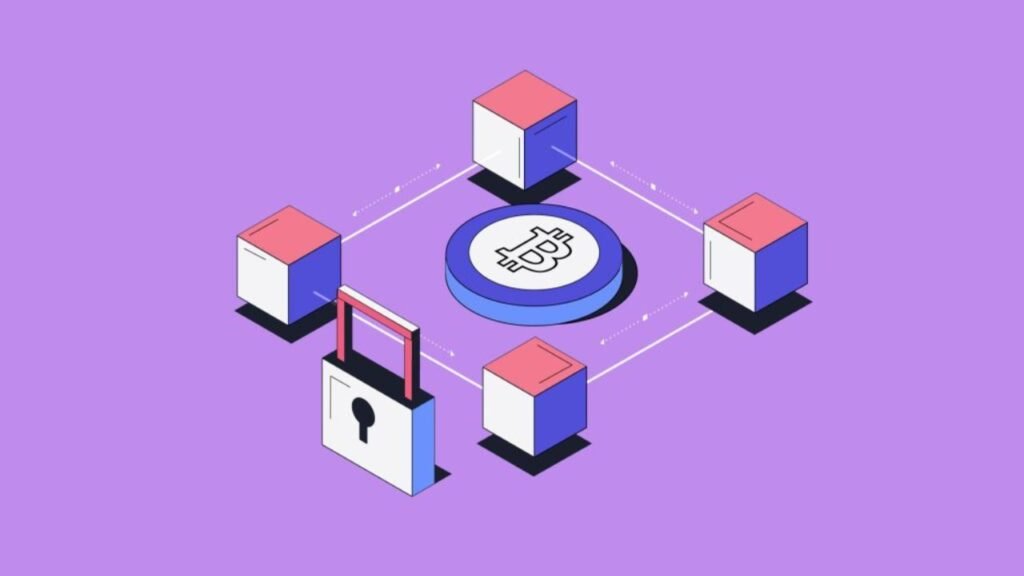
Blockchain technology has rapidly become one of the most revolutionary innovations of our era. Its impact extends from finance and healthcare to supply chains and entertainment. Blockchain is often referred to as a real-time, immutable record of transactions and ownership.
With its potential to revolutionize industries, it is important to understand how blockchain works and its real-world applications.
Blockchain technology overview
Blockchain is a distributed ledger technology that enables secure and transparent recording of transactions across multiple parties without the need for intermediaries. It’s currently being used to store data for things like cryptocurrencies, NFTs, and DeFi smart contracts.
Just as a ledger is maintained to keep track of transactions in business, similarly the account of Cryptocurrency transactions on the Internet is handled through Blockchain.
Blockchain technology is a chain of blocks, where each block contains a set of transactions. Each block has a limited storage capacity, so when a block is full, it connects to the previously filled block, thus creating a complete chain of data. Blockchain makes your data extremely secure so that no one can tamper with it unnecessarily.
Who Invented Blockchain?
Blockchain, introduced by Satoshi Nakamoto in 2008, is a decentralized ledger for secure transactions. Notable figures like Vitalik Buterin, Charles Hoskinson, and Gavin Andresen contributed to its development. Blockchain has grown from a concept to a versatile technology in various industries.
Key Components of a Blockchain
Nodes: Nodes are participants in the blockchain network. They can be individuals or organizations that maintain a copy of the blockchain technology and validate transactions.
Transactions: Transactions represent the movement of assets or data on the blockchain. They are grouped into blocks for processing.
Miners: In PoW blockchains like Bitcoin, miners use computational power to solve complex mathematical puzzles, secure the network, and validate transactions. In return, they are rewarded with cryptocurrency tokens.
How Does Blockchain Work
Just like a ledger is made up of many pages, a blockchain is made up of many different “blocks of data.” With the advent of blockchain technology, there will be no need for databases that you handle (like banks).
Cryptographic techniques are used to secure data on the blockchain. Public and private keys ensure that only authorized users can access and control their assets.
If we look at the old technology, any person having admin rights can make any desired changes in the data. For example, your bank can show your account balance as ZERO at any time if it wants, because it has the right to make changes in its database.
How Blockchain Technology Differs From Traditional Systems?
| Aspect | Traditional Systems | Blockchain Technology |
| Control | A single company owns the data | Shared network with no single owner |
| Trust | Based on institutions | Based on cryptography & consensus |
| Data Changes | Easy to edit or delete | Practically immutable |
| Transparency | Limited access | Shared or permissioned visibility |
| Failure Risk | Single point of failure | Highly fault-tolerant |
| Cost Model | Cheap early, costly long-term | Higher setup with lower lifetime cost |
| Best Fit | Internal apps | Multi-party and regulated systems |
What Is Blockchain-as-a-Service (BaaS)?
Blockchain-as-a-Service (BaaS) is a cloud-based model where providers manage and host the blockchain infrastructure. BaaS supplies the accountability, transparency, and security of blockchain. Key functions handled by providers include:
- Hosting and managing blockchain nodes
- Ensuring network security and uptime
- Applying software updates automatically
- Allowing enterprises to focus on core operations while accessing scalable, reliable blockchain technology.
BaaS is ideal for startups, enterprises, fintechs, banks, and government agencies. It enables rapid deployment, secure operations, and competitive advantage across industries.
What are the key benefits of blockchain?
The transparent and unalterable nature of blockchain technology lend it to a number of advantages for organizations:
Transparency: Information in blockchains is viewable by all participants and cannot be altered. This will reduce risk and fraud while creating trust. The public ledger records transactions that all participants can see. It cannot be changed or removed, ensuring reliability.
Security: Cryptographic encryption and decentralization make blockchain highly secure against fraud and hacking. This shows promise for business and Internet of Things (IoT) security.
Automation: Blockchain is programmable which makes it possible to automatically trigger actions, events, and payments once conditions are met.
Cryptocurrencies use the blockchain to record monetary transactions. ompanies adopting blockchain gain faster operations, verified traceability, smart contracts, and on-chain ecosystems. Blockchain technology has the potential to reshape industries, enhance security, and enable innovative applications.