Smart contracts are automated contracts based on blockchain technology that execute automatically according to predetermined terms and conditions. These transactions are traceable and cannot be undone.
Smart contracts allow for secure transactions and agreements between anonymous parties. Smart Contracts do not require any intermediaries, making them more secure, transparent, and reliable.
Smart Contract History
The idea of smart contracts was first introduced by Nick Szabo in 1994. However, their actual use began in 2015 with the Ethereum blockchain. Ethereum is a platform that facilitates the creation and execution of smart contracts.
Smart contracts don’t include legal language or the actual terms of an agreement. They are automate the actions between two parties.
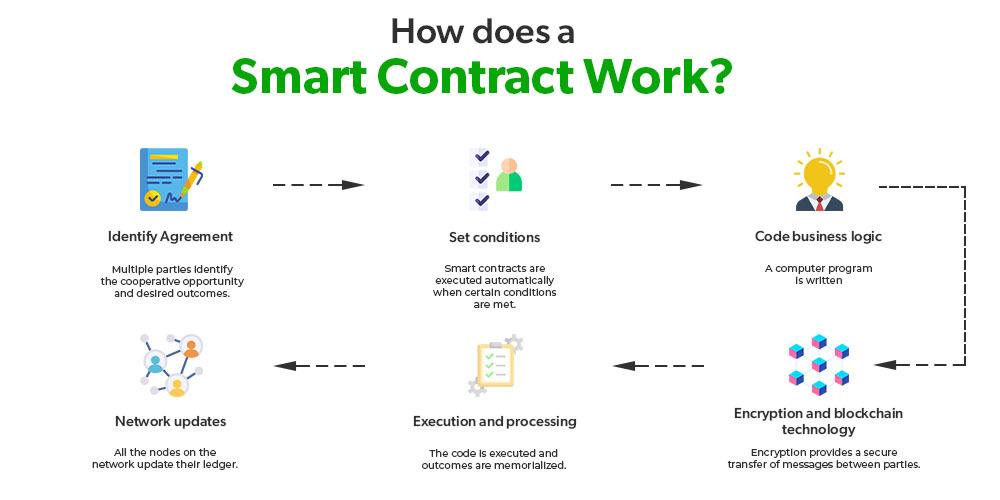
How do Smart Contracts work?
Smart contracts operate based on if-then logic. This means that when a specific condition is met, the smart contract is automatically executed. These are stored on every node of the blockchain and track all transactions.
Because smart contracts execute agreements, they can be used for many different purposes. In short, smart contracts allow the front end of the Dapp to communicate. Any kind of fraud can be avoided through Smart Contracts on Blockchain.
Conclusion
Smart contracts are code written into a blockchain that executes the actions. This is a revolutionary technology that makes processes fast, secure, and efficient. As blockchain technology continues to develop, the use of smart contracts is rapidly expanding in many sectors. This technology will become a crucial part of digital transactions in the future.
Frequently Asked Questions
What is a smart contract?
Smart contract is a self-executing contract with the terms of the agreement directly written into lines of code. Smart contracts run on blockchain networks.
Which blockchain platforms support smart contract development?
Several blockchain platforms support smart contract development, including Ethereum, Binance Smart Chain, Solana and more.
WHO response on Covid-19
The World Health Organization is the global coordinating agency for the response to the COVID-19 pandemic. The Organization works with Member States and partners on all aspects of the pandemic response, including facilitating research, developing guidance, coordinating vaccine development and distribution, and monitoring daily case numbers and trends around the world.
Since April 2020, the Access to COVID-19 Tools (ACT) Accelerator, launched by WHO and partners, has supported the fastest, most coordinated, and successful global effort in history to develop tools to fight a disease. COVAX, the vaccines pillar of the ACT-Accelerator is a ground-breaking global collaboration to accelerate the development, production, and equitable access to COVID-19 tests, treatments, and vaccines.
WHO response on Covid-19
The World Health Organization is the global coordinating agency for the response to the COVID-19 pandemic. The Organization works with Member States and partners on all aspects of the pandemic response, including facilitating research, developing guidance, coordinating vaccine development and distribution, and monitoring daily case numbers and trends around the world.
Since April 2020, the Access to COVID-19 Tools (ACT) Accelerator, launched by WHO and partners, has supported the fastest, most coordinated, and successful global effort in history to develop tools to fight a disease. COVAX, the vaccines pillar of the ACT-Accelerator is a ground-breaking global collaboration to accelerate the development, production, and equitable access to COVID-19 tests, treatments, and vaccines.